Admin
Admin 
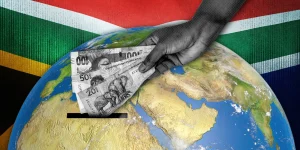
The escalating military confrontation involving the United States, Israel, and Iran is sending shockwaves through global markets. While South Africa is geographically distant from the conflict zone, the economic and financial ripple effects are already being felt locally. For an emerging market like South Africa, geopolitical instability of this magnitude creates layered risks — from currency volatility and inflation pressures to trade disruptions and diplomatic complexity.
Financial Markets Under Pressure
One of the first and most visible impacts has been in financial markets. Heightened global uncertainty has triggered a classic “risk-off” response from investors. Capital typically flows out of emerging markets during geopolitical crises and into perceived safe-haven assets such as the U.S. dollar.
As a result, the South African rand has weakened against major currencies. A weaker rand increases the cost of imports, particularly fuel and industrial inputs, and adds pressure to inflation. The Johannesburg Stock Exchange has also experienced volatility as investors reduce exposure to risk-sensitive assets.
For a country already managing structural economic challenges, currency instability complicates fiscal planning, investment confidence, and business operations.
Rising Oil Prices and Fuel Costs
The most direct transmission channel to South Africa is through energy markets. Tensions in the Middle East — particularly around critical oil transit routes — have pushed global crude oil prices higher.
South Africa imports a significant portion of its fuel. When oil prices rise globally, domestic fuel prices typically follow. Higher petrol and diesel costs affect transport, logistics, agriculture, and manufacturing. These increases eventually filter through to consumers in the form of higher food and goods prices.
For households already under financial strain, rising fuel costs reduce disposable income and increase overall cost-of-living pressures.
Inflation Risks and Interest Rate Implications
Higher energy prices feed directly into inflation. Transport and production costs increase, and those costs are often passed down the value chain. If inflation accelerates meaningfully, the South African Reserve Bank may have limited flexibility to ease interest rates.
This creates a policy dilemma: support economic growth through lower borrowing costs, or maintain a tighter stance to prevent inflation from becoming entrenched. In a fragile growth environment, such external shocks make monetary policy decisions significantly more complex.
Trade and Supply Chain Exposure
Although South Africa is not directly involved in the conflict, global trade routes and supply chains are interconnected. Disruptions in shipping lanes or heightened security risks can increase freight costs and delay deliveries of key goods.
Certain sectors could see mixed effects. Gold mining companies may benefit from increased safe-haven demand, as gold prices typically rise during geopolitical crises. However, broader risk aversion can still weigh on equity valuations and capital flows into emerging markets.
Businesses with exposure to Middle Eastern markets or international financing may also reassess risk and delay expansion or investment plans.
Travel and Tourism Disruptions
Flight cancellations, airspace closures, and safety concerns in parts of the Middle East have also affected international travel. South Africans traveling to or through Gulf countries have faced disruptions, and tourism flows could slow if global travel confidence weakens.
Tourism is an important contributor to South Africa’s economy. Any sustained global uncertainty can dampen travel demand and affect hospitality and related industries.
Diplomatic and Strategic Considerations
South Africa has traditionally positioned itself as an advocate for multilateral diplomacy and peaceful resolution of conflict. In a rapidly polarizing global environment, maintaining balanced diplomatic relations while protecting national economic interests becomes increasingly challenging.
As geopolitical blocs harden, countries like South Africa must navigate complex international dynamics without jeopardizing trade partnerships or strategic alliances.
A Vulnerable Economy in a Volatile World
The Middle East conflict highlights a core reality of globalization: even distant wars can have immediate local consequences. For South Africa, the effects are being felt through currency weakness, higher fuel costs, inflation risks, market volatility, and trade uncertainty.
While the country is not a direct participant in the conflict, it is economically exposed to global shocks. The duration and intensity of the conflict will determine whether these impacts remain short-term volatility or evolve into longer-lasting economic pressure.
In the meantime, policymakers, businesses, and households will need to prepare for a period of heightened uncertainty in an already fragile economic landscape.