Admin
Admin 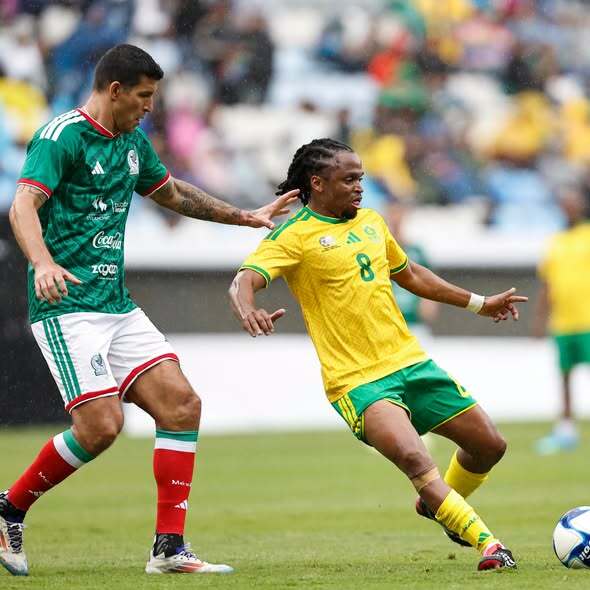
In the weeks before South Africa hosted the 2010 FIFA World Cup, Bafana Bafana appeared to be building towards something special.
The country was caught up in World Cup fever. Stadiums were filling up, supporters were dreaming and the national team was producing the kind of results that made people believe the host nation might surprise the world.
South Africa beat Thailand 4 0.
Then came Colombia.
Bafana Bafana won 2 1 at Soccer City in a match that would later become one of the most controversial friendlies in the country’s football history.
Four days later, South Africa destroyed Guatemala 5 0.
At the time, these results looked like evidence that Carlos Alberto Parreira’s team was ready.
Years later, however, a much darker story emerged.
A FIFA investigation uncovered how an international match fixing network had infiltrated South African football in the build up to the World Cup, with suspicious refereeing appointments at the centre of the operation.
The players were not accused of being part of the scheme.
The problem was much closer to the referee’s whistle.
THE MAN BEHIND THE NETWORK
At the centre of the scandal was Wilson Raj Perumal, a Singaporean match fixer who became one of the most notorious figures in international football corruption.
Perumal was connected to a global network that targeted football matches for betting purposes. His operations were not limited to one country or one competition. The network moved across continents, using friendly matches and international fixtures as opportunities to manipulate games.
In South Africa, one of the crucial vehicles was Football 4U International.
The company presented itself as a legitimate football organisation capable of helping arrange international friendlies and referees.
That arrangement became particularly significant because South Africa was preparing for the biggest sporting event in its history.
SAFA had enormous responsibilities ahead of the World Cup, while its financial and administrative situation was under pressure.
Football 4U was therefore able to gain access to the process of organising international friendly matches.
And with that access came influence over refereeing appointments.
That was the vulnerability.
The match fixers did not necessarily need to approach a Bafana Bafana player.
They could potentially manipulate the environment around the players instead.
THE PERFECT TARGET: FRIENDLY MATCHES
International friendlies can be attractive to match fixers.
Unlike World Cup matches, they generally have no tournament points at stake.
They are also often organised through different commercial and administrative arrangements, creating opportunities for outside intermediaries to become involved.
The matches involving Bafana Bafana before the World Cup became particularly suspicious because of the officials appointed to them.
A FIFA investigation eventually focused on seven international friendly matches played in South Africa between May and June 2010. Five involved the senior South African national team.
The matches included fixtures against Colombia, Guatemala, Denmark, Bulgaria and another group of international opponents.
The investigation uncovered evidence that referees had been appointed through channels connected to Football 4U.
The implications were enormous.
South Africa was about to host the World Cup.
And a foreign match fixing network had managed to get its people close to the matches involving the host nation’s national team.
COLOMBIA: THREE GOALS, THREE PENALTIES
On 27 May 2010, South Africa played Colombia at Soccer City.
The stadium would soon host the opening match of the World Cup and, eventually, the final.
Bafana won 2 1.
But the manner in which the goals arrived was extraordinary.
All three goals came from penalties.
The Colombian goalkeeper saved one penalty, only for the referee to order a retake after ruling that the goalkeeper had moved off his line.
At the time, the match could simply have been remembered as an unusual refereeing performance.
But after the wider investigation emerged, the game took on a completely different significance.
The Colombia match was among the friendlies scrutinised in the investigation into suspected manipulation of South Africa’s pre World Cup games. Contemporary reporting based on the FIFA investigation described the listed matches as probably fixed on the balance of probabilities.
That distinction is important.
The evidence does not mean every player knew what was happening.
It means the circumstances surrounding the match raised serious questions about the officials controlling it.
THEN CAME GUATEMALA
Four days later, South Africa played Guatemala.
The final score was 5 0.
But the most remarkable statistic was not the score.
It was the penalties.
Nigerien referee Ibrahim Chaibou awarded South Africa three penalties during the match, with handball decisions becoming a major part of the controversy surrounding the fixture.
Chaibou’s performance later became one of the most infamous examples associated with the scandal.
According to reporting at the time, Chaibou was seen entering a South African bank before the Guatemala match carrying a large amount of cash. Another referee travelling with him reportedly said the amount could have been as much as $100,000.
Chaibou denied fixing matches.
But the controversy did not disappear.
Years later, FIFA’s independent ethics process would deliver an extraordinary verdict.
THE REFEREE FIFA EVENTUALLY BANNED FOR LIFE
In 2019, FIFA announced that Ibrahim Chaibou had been found guilty of accepting bribes.
He was banned from taking part in any football related activity for life and fined CHF200,000.
The decision did not simply leave the allegations surrounding his career hanging in the air.
It established that FIFA’s disciplinary system had found him guilty of bribery.
That made the events surrounding the Guatemala match even more difficult to dismiss as simply poor refereeing.
Chaibou had already become a controversial figure in football before his lifetime ban.
His name was later connected to another notorious international friendly, Argentina against Nigeria in 2011, where he awarded controversial penalties.
But his involvement in the South African scandal remained one of the defining episodes of his refereeing career.
THE MATCH THAT ALMOST HAPPENED
Then came Denmark.
By this point, people inside SAFA had started noticing that something was wrong.
Steve Goddard, who was involved in refereeing administration, became suspicious of the way officials were being appointed for Bafana Bafana’s friendlies.
The next appointment raised an immediate red flag.
Ibrahim Chaibou was scheduled to referee South Africa’s friendly against Denmark.
But Chaibou never took charge.
Goddard confronted him in the stadium tunnel and prevented him from refereeing the match.
A replacement referee was appointed.
South Africa went on to win 1 0.
The incident became one of the most remarkable moments in the entire scandal because it suggested that someone inside South African football had finally recognised the pattern.
The referee network had been disrupted.
And according to accounts surrounding the FIFA investigation, Perumal was furious.
Goddard later said he received a threatening message after interfering with the appointment. The threat was serious enough to demonstrate the potential danger involved in confronting the network.
The match fixer had expected a particular referee.
He did not get him.
THIS WAS BIGGER THAN ONE REFEREE
The biggest mistake would be to tell this story as if Ibrahim Chaibou was simply a rogue referee.
The investigation went much deeper.
FIFA eventually took disciplinary action against several South African football officials over their roles and conduct surrounding the friendlies.
Former SAFA CEO Leslie Sedibe was banned for five years and fined CHF20,000 in 2016.
Former SAFA refereeing officials Steve Goddard and Adeel Carelse were each banned for two years.
Lindile Kika, who had been SAFA’s head of national teams in 2010, had already received a six year ban.
The sanctions were not all for exactly the same offence.
That distinction matters.
FIFA’s disciplinary cases included allegations and findings relating to failures of conduct, reporting, disclosure and cooperation, rather than establishing that every sanctioned official personally fixed matches.
But collectively, the cases showed how deeply the scandal had penetrated the administration surrounding the national team.
The problem was not simply somebody with a whistle.
It was the system that allowed suspicious appointments to happen in the first place.
WHAT ABOUT THE BAFANA PLAYERS?
This is where the story becomes particularly uncomfortable.
The players were not accused of participating in the scheme.
They were footballers preparing for a World Cup.
When Katlego Mphela scored, he was trying to score.
When Siphiwe Tshabalala and his teammates celebrated, they believed they were winning football matches.
The supporters in the stands believed the same thing.
There is no evidence that the Bafana players walked onto the pitch knowing that the refereeing environment around them had potentially been compromised.
That makes the scandal different from the classic image of match fixing.
The footballers did not necessarily have to be bought.
The people controlling the conditions of the match could be.
WHY THE BETTING MARKET MATTERED
The match fixing operation was not necessarily about simply deciding which team would win.
That is one of the biggest misconceptions about modern football corruption.
A corrupt referee can manipulate individual incidents without controlling the entire result.
A penalty.
A red card.
A free kick.
A suspicious amount of added time.
An unusual decision.
Those incidents can influence betting markets without requiring the fixer to know exactly which team will eventually win.
That is what makes referee manipulation so dangerous.
The referee has the ability to influence the game while appearing to be part of the normal machinery of football.
And that is precisely why the South African scandal became so significant internationally.
It showed how an organised betting network could attempt to exploit the infrastructure surrounding an international football team.
THE SCANDAL OUTLIVED THE WORLD CUP
South Africa’s 2010 World Cup ultimately ended in disappointment.
Bafana Bafana became the first host nation in World Cup history to fail to reach the knockout stage.
But the tournament itself remains one of the proudest sporting moments in South African history.
The opening ceremony.
The vuvuzelas.
Tshabalala’s famous goal against Mexico.
The packed stadiums.
The sense that Africa had finally been given its moment on football’s biggest stage.
The match fixing scandal did not erase those memories.
But it created a darker chapter behind them.
The investigation showed that while millions of South Africans were preparing to celebrate football, an international criminal network had been attempting to exploit the same tournament build up for financial gain.
THE REAL LESSON OF THE 2010 SCANDAL
The most frightening part of the story is not that match fixers existed.
Football already knew that.
It is that they were able to get so close.
They found a way into the administration surrounding international friendlies.
They gained influence over referee appointments.
They identified opportunities in matches that appeared meaningless to the average supporter.
And they operated while the country was preparing for the biggest sporting event it had ever hosted.
That should change the way those pre World Cup results are remembered.
The 4 0 win over Thailand.
The 2 1 victory over Colombia.
The 5 0 demolition of Guatemala.
For supporters at the time, they were reasons to believe.
Today, they are also reminders that football can look completely normal on the surface while something very different is happening underneath.
Bafana Bafana’s players were chasing World Cup glory.
The supporters were chasing a dream.
And somewhere behind the scenes, match fixers were chasing something else entirely.
Money.
That is the real story of the phantom referees.