Admin
Admin 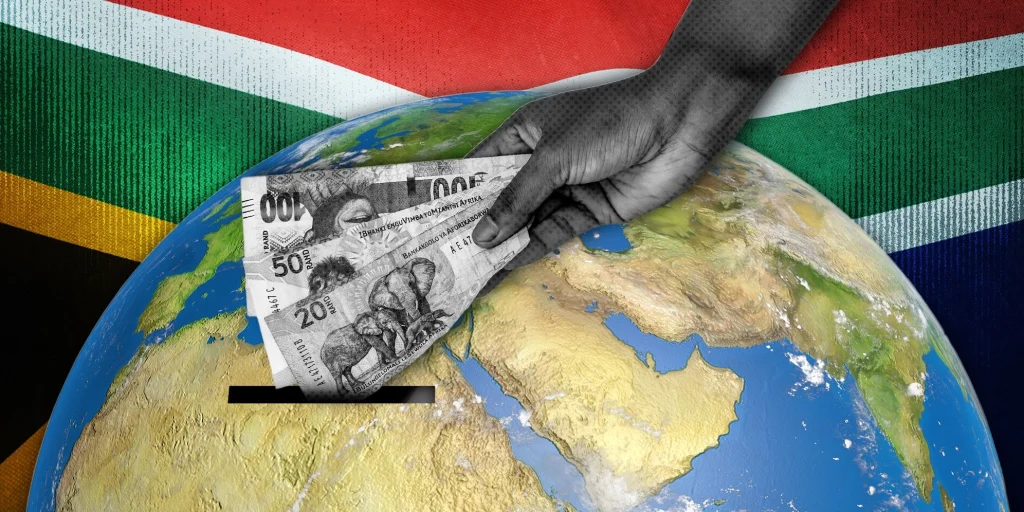
South Africa is borrowing another $1 billion to tackle one of the country’s most persistent problems: getting its biggest cities to provide reliable water, electricity, sanitation and waste services.
The New Development Bank has concluded a $1 billion loan to support the government’s Metro Trading Services Reform programme, covering all eight metropolitan municipalities: Buffalo City, Cape Town, Ekurhuleni, eThekwini, Johannesburg, Mangaung, Nelson Mandela Bay and Tshwane.
But this is not simply a case of borrowing money and spending it on infrastructure.
The loan is performance based. Funding is linked to institutional improvements and independently verified targets approved by metro councils.
That distinction matters.
South Africa has spent years dealing with deteriorating municipal infrastructure, weak financial management and unreliable basic services. Treasury’s own reform programme describes reliable urban services as essential not only for residents, but also for investment and economic growth.
The government is therefore trying to fix the machinery behind the services, rather than simply plugging individual holes.
The real target is municipal sustainability
The reform focuses on water and sanitation, electricity and energy, and solid waste management.
These are not just basic services. They are revenue generating municipal businesses.
If a city cannot reliably provide electricity or water, collect waste or maintain the infrastructure behind those services, the consequences go far beyond inconvenience.
Businesses become less willing to invest. Infrastructure deteriorates further. Municipal finances come under pressure. And residents ultimately carry the cost.
Treasury’s wider programme aims to improve the financial and operational performance of these services while increasing municipalities’ ability to attract commercial finance. The reform was launched with a R54 billion performance based incentive programme designed to help unlock more than R100 billion in metro infrastructure investment over time.
The NDB loan is therefore one piece of a much bigger attempt to change how South Africa’s major cities operate.
But borrowing is not the hard part
South Africa has access to development finance.
The harder question is whether the metros can turn that financing into lasting improvements.
The NDB loan has a 15 year maturity, including a five year grace period, with the interest rate linked to SOFR, according to National Treasury.
That gives cities time to implement reforms.
But money can build infrastructure. It cannot, by itself, fix weak management, poor planning, political interference or systems that fail to collect revenue effectively.
That is why the performance based nature of this programme may ultimately be more important than the size of the loan.
South Africa does not simply need more money flowing into municipalities.
It needs municipalities capable of turning that money into functioning infrastructure, sustainable revenue and services residents can depend on.
A $1 billion loan can help create that opportunity.
Whether it actually changes the trajectory of South Africa’s cities will depend on what happens after the money arrives.