Admin
Admin 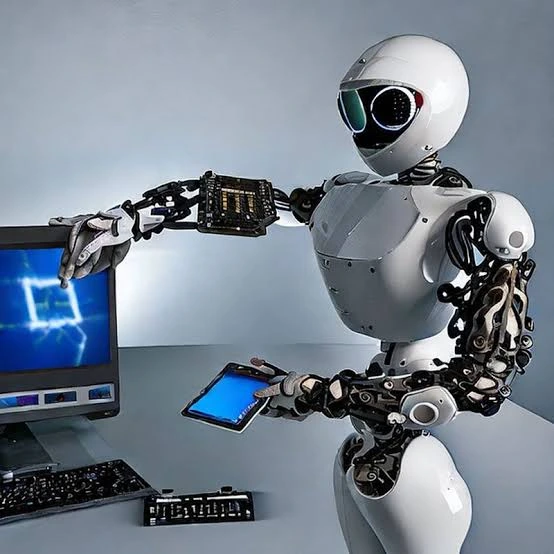
Artificial intelligence is no longer just helping South African companies write emails, analyse documents or automate routine work.
It is increasingly moving into the boardroom.
AI can analyse financial information, identify risks, assess market trends and help directors evaluate major business decisions. But there is an uncomfortable question that South African company law has not fully answered:
What happens when the AI gets it wrong?
Recent legal research into AI and South African corporate governance highlights uncertainty around directors’ duties, reliance on AI generated advice, delegation and liability. The issue is becoming more important as companies move from using AI as an administrative tool to using it as part of strategic decision making.
And this is where the technology debate becomes a corporate governance debate.
AI can advise the board. It cannot become the board.
There is an important difference between using AI to process information and allowing an AI system to effectively make decisions.
A board could use AI to analyse thousands of pages of financial information before considering an acquisition. That is very different from allowing an autonomous system to make the acquisition itself.
The legal research suggests directors can potentially use AI as a tool, but they cannot simply hand over their responsibilities and assume the technology carries the liability. Directors remain responsible for exercising their own judgment and acting in the company’s interests.
That makes AI literacy increasingly important for directors.
They do not necessarily need to become programmers. But if a board cannot understand the limitations of the system it is relying on, it becomes difficult to argue that the board is properly supervising the technology.
The black box problem
There is another complication.
AI systems can produce convincing answers without making their reasoning easy to understand. If a board receives an AI generated recommendation to approve an investment, but cannot properly establish why the system reached that conclusion, how much confidence should directors place in it?
There are also concerns around biased data.
AI learns from information generated by the world around it. If that information contains historical inequalities or biases, an AI system can potentially reproduce them rather than eliminate them.
That is particularly relevant in South Africa, where historical inequalities remain reflected in many datasets.
So the question is not whether AI is intelligent enough to sit alongside executives.
The bigger question is whether executives are equipped to challenge it.
South Africa’s rules are still catching up
South Africa is not doing nothing.
The government published a draft national AI policy for public comment in April 2026, with objectives including responsible governance, ethical and inclusive AI and human centred deployment. Cabinet subsequently approved its withdrawal so that the policy could be reworked and national standards on ethical AI could be strengthened.
King V, South Africa’s latest corporate governance code, also reflects the growing importance of AI governance and responsible technology oversight. It became effective for financial years beginning on or after 1 January 2026.
But governance principles are not the same thing as a detailed legal framework explaining exactly who carries responsibility when an AI assisted corporate decision causes financial or third party harm.
That gap matters.
Imagine a company loses millions after directors approve an investment based heavily on an AI generated recommendation. Was the problem the software? The developer? The company’s management? The directors who approved the decision? Or the failure to properly supervise the system?
Those questions will become increasingly difficult to avoid.
AI is moving into South African boardrooms faster than the law is defining the boundaries around it.
The real challenge may therefore not be teaching companies how to use AI.
It may be teaching boards when not to trust it.
And when something goes wrong, making sure there is still a human being clearly responsible for the decision.