Admin
Admin 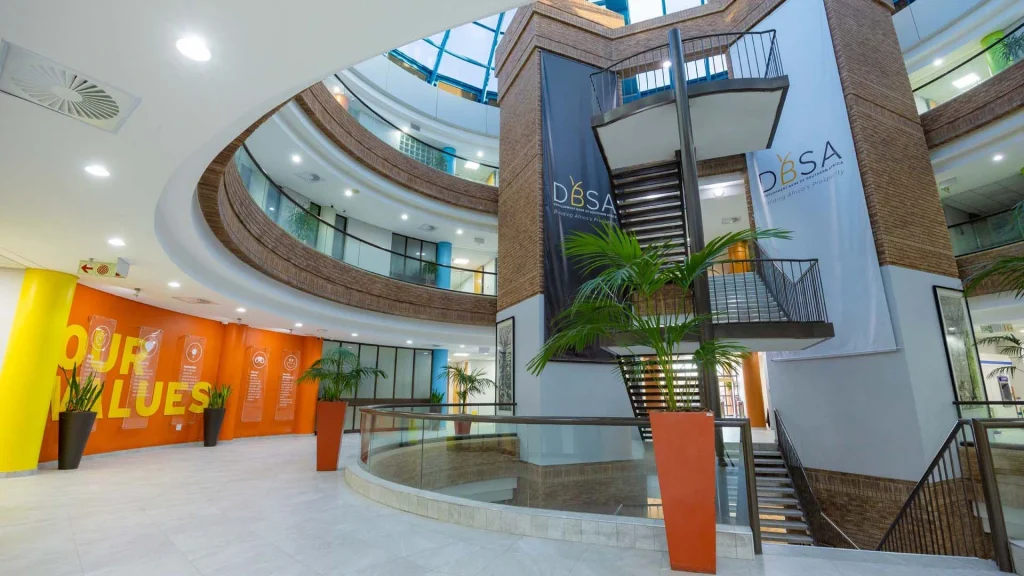
The Development Bank of Southern Africa has just delivered its strongest financial result yet.
The state owned development finance institution reported a net profit of R7.8 billion for the year ended March 2026, up 47% from R5.3 billion a year earlier. Its total assets also grew to R130.5 billion, while disbursements to infrastructure projects increased 18.3% to R20.7 billion.
On the surface, that looks like a major success story.
But there is another number South Africa should probably be paying more attention to.
Nedbank’s latest Capital Expenditure Project Listing found that the value of new investment projects announced during the first half of 2026 fell to an annualised R137.7 billion, an 81% decline from the R718.5 billion recorded in 2025. Nedbank expects gross fixed capital formation to grow by just 0.6% this year.
So we have a development bank making record profits while the country’s broader pipeline of new investment remains under pressure.
That is not necessarily a contradiction, but it is an important warning.
DBSA is doing its part
The DBSA says it delivered R62.4 billion in infrastructure development support during the year and facilitated more than 92,000 jobs through infrastructure investment. It also says R98.5 billion in funding and investment was catalysed through partnerships.
The bank also exceeded some of its infrastructure targets, including its contribution to infrastructure delivered and the value of infrastructure unlocked in under-resourced municipalities.
But not everything went according to plan.
The bank facilitated around 20,000 new jobs against a target of 26,000 in its domestic activities, according to the figures supplied in the report.
That matters because infrastructure investment is ultimately supposed to do more than produce impressive financial statements.
It should build roads, water systems, energy capacity and other infrastructure while supporting economic activity and employment.
The bigger problem is the investment pipeline
South Africa’s challenge is therefore bigger than the performance of one institution.
The country needs a steady flow of private and public investment large enough to expand productive capacity and create jobs.
Nedbank’s latest data shows just how fragile that pipeline can be. Although private-sector projects accounted for 77.8% of announced investment plans in the first half of 2026, the overall value of new announcements dropped sharply. Renewable energy remained the dominant investment theme.
This is where the DBSA’s success becomes interesting.
A profitable development bank has greater financial capacity to support infrastructure and development projects. But it cannot single-handedly solve the reasons businesses may hesitate to invest.
That requires confidence, functioning infrastructure, predictable regulation, access to finance and projects that make commercial sense.
The DBSA’s numbers show that an institution can perform exceptionally well even while the broader economy faces difficult investment conditions.
The bigger test for South Africa is whether that institutional strength can help unlock a much larger wave of investment beyond the bank itself.
R7.8 billion in profit is impressive.
But for an economy battling weak growth and unemployment, the more important number may ultimately be how much additional productive investment that financial strength helps create.