Admin
Admin 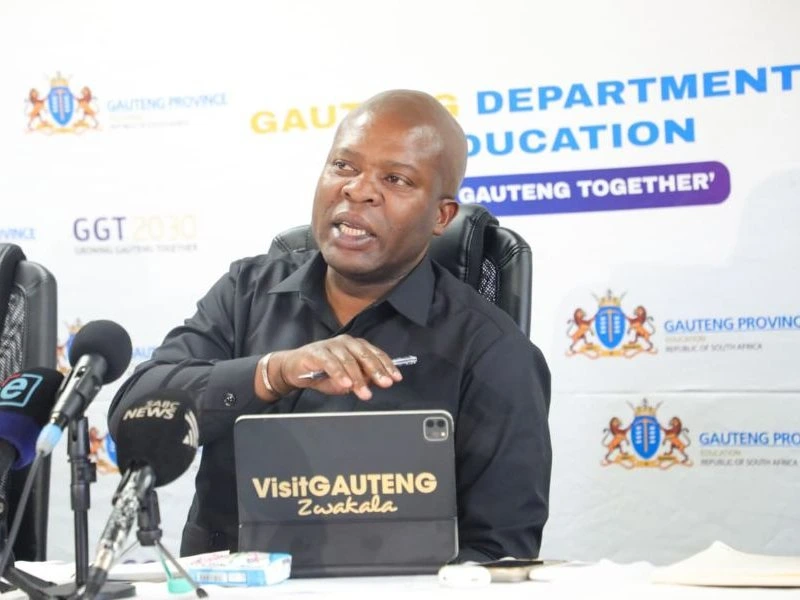
Parents looking for a place for their children at an independent school in Gauteng have been warned not to assume that a professional-looking school building, branded uniform or polished website means the institution is legally allowed to operate.
Gauteng Education MEC Lebogang Maile has urged parents to do their homework before enrolling their children and, more importantly, before paying school fees.
The warning comes as concerns around independent schools continue to generate thousands of complaints and enquiries, ranging from registration and admissions to school fees, bullying, discipline, curriculum and assessment.
The central message from the Gauteng Department of Education is simple: parents must verify a school before trusting it with their child’s education.
Registration and accreditation are not the same thing
One of the biggest areas of confusion for parents is the difference between a school’s registration and its accreditation.
According to Maile, registration with the Gauteng Department of Education gives an independent school the legal authority to operate.
Accreditation, on the other hand, relates to quality assurance within the relevant education framework.
This distinction can become especially important for parents with children approaching Grade 12.
An independent school offering the National Senior Certificate must meet the relevant requirements for the qualification it provides and ensure that its Grade 12 learners are properly registered.
For a parent, this is not simply an administrative issue.
A mistake at this level can potentially affect a learner’s academic future.
A child may spend years attending a school only for questions to later emerge about the school’s legal status, the curriculum being offered or the processes used to register learners for recognised examinations.
That is why Maile has urged parents not to wait until a problem develops before checking a school’s credentials.
A professional appearance is not proof
Independent schools can invest heavily in their public image.
A school may have:
- Modern-looking buildings
- Branded uniforms
- Social media pages
- A professional website
- Advertising campaigns
- Attractive brochures
But none of those things automatically prove that the school is legally authorised to operate.
As Maile warned, a school building, uniform, website or advertisement does not on its own prove that an institution is legally operating.
That warning matters in an environment where parents are often under pressure to find school placements.
Gauteng faces significant pressure on its education system because of growing learner numbers and demand for school spaces. Recent reporting has highlighted the strain that rising enrolments and overcrowding continue to place on schools across the province.
When parents are desperate to secure a place, they may be tempted to accept a school’s promises without carrying out proper checks.
That is exactly the situation the department is warning against.
What parents should check before paying school fees
Parents have been advised to ask direct questions and request the necessary documentation before committing to an independent school.
Some of the important things to check include the school’s:
Registration certificate
Parents should establish whether the school is registered with the Gauteng Department of Education.
Registration is a key indication that the institution has the legal authority to operate as an independent school.
EMIS number
Parents should ask for the school’s Education Management Information System, or EMIS, number.
This is an important part of identifying and verifying an educational institution within the education system.
Physical and fiscal address
Parents should know where the school is physically based and should also establish its official fiscal or legal address.
This can become important if there is a dispute involving school fees, learner records or contractual obligations.
Curriculum
Parents should ask exactly which curriculum the school follows.
This should not be left to assumptions based on advertising or conversations with school representatives.
Examination body
For older learners, particularly those approaching matric, parents should establish which examination body the school uses and how learners are registered for their final examinations.
Educator registration
Maile also reminded independent schools that their educators must be registered with the South African Council for Educators.
For parents, this is another important area to verify when choosing a school for their child.
More than 3,600 cases recorded
The department’s warning comes against the backdrop of a significant number of complaints and cases involving independent schools.
Between 2024 and August 2026, the Gauteng Department of Education recorded 3,688 cases relating to independent schools.
The matters covered a wide range of issues, including:
- School registration
- School fees
- Bullying
- Disciplinary matters
- Admissions
- Curriculum
- Assessment
The figures show that the relationship between parents and independent schools can involve much more than simply paying fees and attending classes.
The Gauteng Department of Education has previously recorded hundreds of independent-school queries in a single reporting period, with disputes involving admissions, curriculum, discipline, outstanding fees, learner reports and registration among the recurring issues.
That makes it even more important for parents to understand exactly what they are signing up for.
Strong results do not remove the need for accountability
Maile’s warning was not an attack on independent schools as a whole.
In fact, the sector continues to play an important role in Gauteng’s education landscape.
The MEC noted that independent schools recorded strong academic results in the 2025 National Senior Certificate examinations.
Among the 12,291 learners included in the department’s analysis, the sector achieved an overall pass rate of 94.82%.
Those results highlight the contribution independent schools make to education in the province.
But strong academic performance is not the only standard by which a school should be judged.
A school can produce good results while questions about regulation, governance or accountability still need to be answered.
That is why the department’s position is that quality education and proper regulation must go together.
Gauteng has also recently been engaging directly with the Independent Schools Directorate as part of efforts to strengthen oversight, accountability and collaboration across the sector.
Learners should not become victims of disputes
One of the strongest points made by Maile concerns disputes between parents and schools.
Independent schools operate under contractual arrangements with parents, particularly around school fees.
But the MEC warned that children should not become the point at which those disputes are fought.
This is an important issue because previous departmental records show that disputes involving outstanding fees and the withholding of learner documents have formed part of the complaints received about independent schools.
The broader principle is straightforward.
A disagreement between adults should not unnecessarily damage a child’s education.
Parents must understand the financial and contractual commitments they make when enrolling a child at an independent school.
Schools, meanwhile, have responsibilities that go beyond collecting fees.
The learner’s education should remain central.
The bigger message for parents
Choosing a school is one of the most important decisions a parent can make.
For many families, the decision involves major financial sacrifices and long-term planning.
That is why Maile’s warning should not be treated as a minor administrative reminder.
Parents should verify before they enrol.
They should ask questions before they pay.
They should request documents before they commit.
And they should pay particular attention to a school’s legal registration, curriculum and examination arrangements.
A uniform can be designed.
A website can be built.
A school building can look impressive.
But none of those things, on their own, prove that a school is properly authorised to provide the education it is promising.
For parents, the safest approach is also the simplest:
Do not assume. Verify.
Because when something goes wrong with a school, it is often the learner who has the most to lose.