Admin
Admin 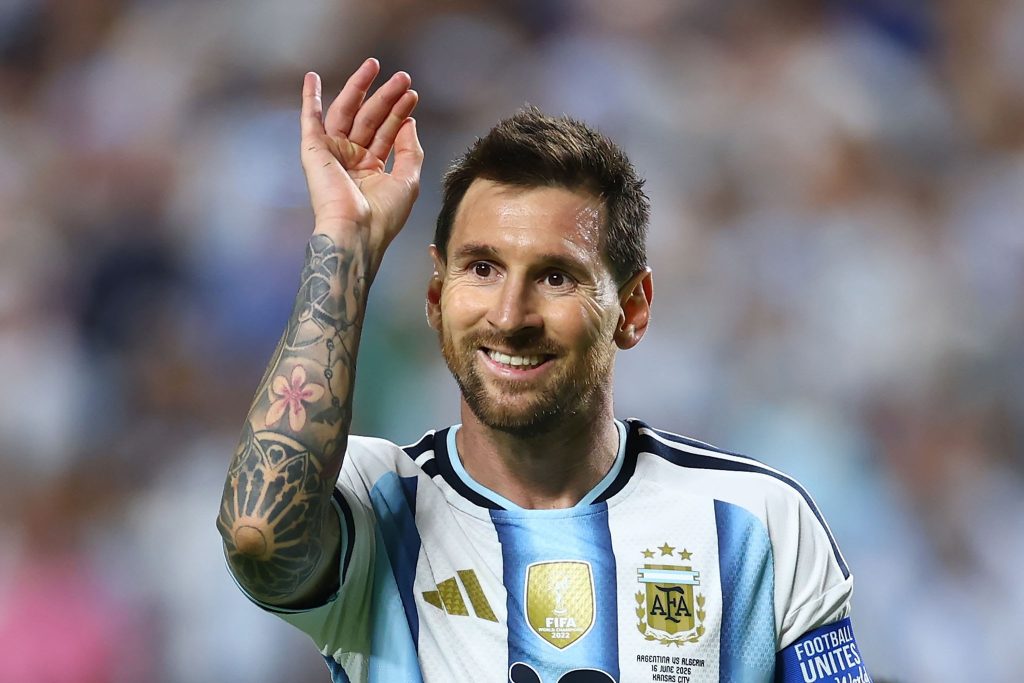
KANSAS CITY, MISSOURI - JUNE 16: Lionel Messi of Argentina reacts during the FIFA World Cup 2026 Group J match between Argentina and Algeria at Kansas City Stadium on June 16, 2026 in Kansas City, United States. (Photo by Chris Brunskill/Fantasista/Getty Images)
Argentina are back in a World Cup final. Beat England 2-1 in Atlanta, book their ticket to face Spain on Monday, and put themselves one win away from something only Brazil have ever done — defend the title. That’s the headline. But it’s not the story everyone’s talking about.
The story is the whistle. Match after match, the same pattern keeps repeating: Argentina in trouble, a big decision goes their way, Argentina survive. Say it enough times and it stops looking like coincidence to a lot of fans — it starts looking like a pattern. Whether it actually is one is a different question. Let’s go match by match and lay out exactly what happened, so you can judge it for yourself.
Group Stage: The Mandi Incident
It starts in the opener against Algeria. Messi’s on his way to a hat-trick, but in the 32nd minute, off the ball, he plants his studs into the shin and Achilles of Algeria captain Aïssa Mandi. Polish referee Szymon Marciniak doesn’t card him. VAR doesn’t even pull it up for a look. Algeria’s federation filed an official protest after the match, arguing the incident was a textbook case of the sport applying one standard to Argentina and another to everyone else. Pundits on ESPN, including Nedum Onuoha and Alejandro Moreno, said on air that it should have been a straight red.
A few games later, against Austria, a similar shape of complaint surfaces — a foul in the build-up to a Messi goal that a chunk of former pros, Peter Schmeichel among them, felt should have wiped the goal off the board. Smaller story, same theme.
Round of 16 vs Egypt: The One That Broke the Internet
This is the match that turned a grumbling narrative into a full-blown FIFA scandal.
Egypt led 2-0 with 11 minutes left. Then Argentina scored three times in the closing stages to win 3-2, capped by a stoppage-time Enzo Fernández winner. Two decisions from French referee François Letexier are still being argued about a week later:
- Egypt had a second-half goal from Mostafa Zico ruled out after VAR flagged a foul in the buildup — a call FIFA’s Pierluigi Collina has since defended, insisting a foul earlier in the phase of play justifies overturning a goal even if it wasn’t “obvious” live.
- Moments before Argentina’s winning move started, Mohamed Salah went down in the box under contact from Julián Álvarez. No penalty given. Collina’s explanation: the officials judged it “normal football contact.”
Egypt’s federation filed an official complaint against Letexier and his crew. Head coach Hossam Hassan said outright there may have been pressure on the referee to keep Argentina alive. Striker Mostafa Zico went further, calling the tournament “fixed” and “directed to Argentina.” Ian Wright and Jamie Carragher both questioned the consistency of the VAR calls on British TV. Letexier handed out several yellows to Egyptian players for minor fouls; Argentina, despite committing more fouls in the match, finished the game with zero cards.
FIFA later confirmed Letexier and fellow Frenchman Clément Turpin would take no further part in the tournament — officially because of a standard conflict-of-interest rule (any official from a country that reaches the semifinals is stood down), not because of the Egypt result. The timing didn’t stop the conspiracy talk.
Quarterfinal vs Switzerland: Extra Time, a Red Card, and a VAR Save
3-1 after extra time. Argentina needed it — Switzerland leveled after the hour mark, and it took a sending-off (Breel Embolo, second yellow for simulation) to swing the momentum before Julián Álvarez’s long-range strike in extra time settled it. One more wrinkle: VAR stepped in mid-match to check whether a booking shown to Argentina’s Leandro Paredes was actually a case of mistaken identity. It’s a smaller incident than the Egypt game, but it fed the same running commentary — that when Argentina are stretched, the video review room finds a way to intervene in their favor.
Semifinal vs England: The Ref With the Perfect Messi Record
Argentina won 2-1 to reach the final, but the pre-match story was almost bigger than the game itself. FIFA appointed American referee Ismail Elfath — and it turned out Elfath has never been involved in a Messi loss. Five matches across his career touching Messi’s teams (MLS games, the 2022 World Cup final as fourth official, Inter Miami’s Leagues Cup win), five results in Messi’s favor. That record alone was enough to set English fans off before kickoff.
Then, three minutes in, Enzo Fernández caught England’s Elliot Anderson around the head in a challenge. Elfath gave a free kick — no card. Dave Portnoy’s “how is that not a red?” reaction summed up a wave of online frustration, with fans pointing out the disparity: a foot injury draws a red, an elbow to the head draws nothing. Social media ran hot in real time — “Argentina are getting away with murder here,” one fan wrote mid-match — and Egypt’s Mostafa Ziko resurfaced his “the tournament was rigged” line the same day, tying the two controversies together.
It’s Not Just Fans Anymore — It’s a Petition
By July 14, an online petition calling for Argentina’s outright disqualification from the World Cup had gathered more than six million signatures. The organizers didn’t mince words, accusing FIFA and match officials of actively favoring Messi and Argentina and asking why the rest of the world should bother competing if the winner’s already been decided. FIFA has not acted on it, and Argentina’s camp has dismissed the idea that officiating could be manipulated at this scale in the VAR era.
FIFA’s Defense
Collina, FIFA’s refereeing chief, has pushed back hard on the bias claims, calling them unfounded and warning that this kind of talk puts real pressure — even threats — on officials and their families. His argument: with this many matches in this short a window, some decisions will always look wrong in isolation, and the honest response is refereeing crews working harder next time, not accusations of a fix.
Where This Leaves Us
Here’s the honest read: none of this proves a fix. Every big call above has a “the letter of the law says X” explanation sitting right next to the “but come on” reaction. That gap — official justification versus what looked obvious to millions of people watching live — is exactly why this story has legs. Argentina have needed a controversial break in three straight knockout rounds to stay alive, and that is either the story of a team living dangerously and getting away with it through resilience and big-moment quality, or it’s the story of a tournament quietly tilted toward its biggest name heading into the send-off of his career. Monday’s final against Spain is the last chance to settle it one way or another — and given the pattern, don’t be shocked if the officiating is still the headline afterward, whatever the scoreline says.
Sources: Al Jazeera, NBC 5 Dallas-Fort Worth, Yahoo Sports/EssentiallySports, The New Arab, South China Morning Post, ESPN, Athlon Sports, The Week, RBC-Ukraine — reporting from July 7–16, 2026.