Admin
Admin 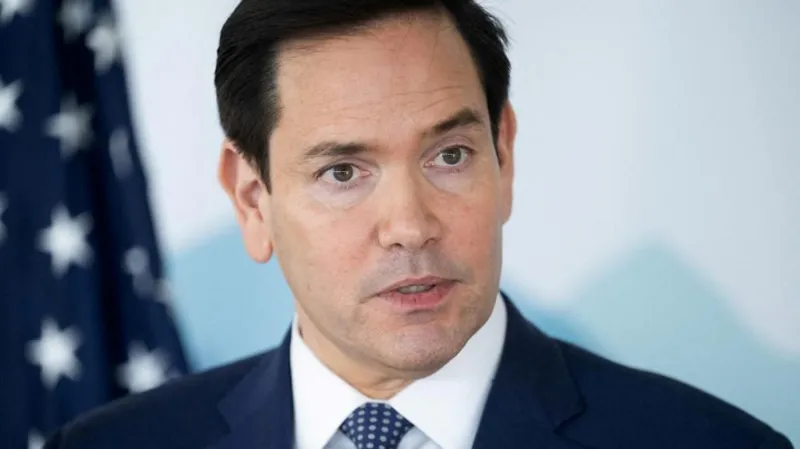
The dispute between South Africa and the United States has now moved beyond diplomatic criticism.
Washington has introduced a new visa restriction policy targeting certain foreign nationals connected to what the Trump administration describes as race based discrimination, incitement of imminent violence and land seizures without compensation in South Africa.
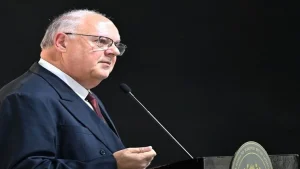
US Secretary of State Marco Rubio announced the policy on 15 September, saying the South African government had failed to adequately address concerns previously raised by Washington. The restrictions are being imposed under Section 212(a)(3)(C) of the US Immigration and Nationality Act, which allows the Secretary of State to restrict entry where a person’s presence could have potentially serious adverse foreign policy consequences for the United States.
The announcement is significant because the disagreement between Washington and Pretoria has been building for months.
What was once largely a diplomatic argument over South Africa’s domestic policies is increasingly becoming a series of concrete measures affecting the relationship.
This is not a blanket visa ban on South Africans
One important distinction is getting lost in the political noise.
The United States has not announced a blanket visa ban on South African citizens.
The new policy is targeted at foreign nationals whom Washington believes are responsible for, or complicit in, policies that enable uncompensated land seizures, race based discrimination or the incitement of imminent violence against minority racial or ethnic groups.
The US announcement did not immediately identify specific people who had been subjected to the restrictions.
That means the immediate question is not whether South Africans can still travel to America.
They can.
The bigger question is who Washington will eventually decide falls within the scope of this policy.
That could determine just how serious the next stage of the dispute becomes.
Washington says South Africa has ignored its concerns
Rubio has framed the move as a response to what the Trump administration considers government sponsored discrimination against Afrikaners and other minority groups.
Washington has repeatedly criticised South Africa’s land reform policies, affirmative action framework and political rhetoric around race.
The US position is that South Africa has failed to adequately address these concerns.
Rubio also linked the latest policy to what Washington describes as rural crime and rhetoric that could contribute to racial violence.
But those are US government allegations and interpretations, not established findings that South Africa has accepted.
Pretoria has repeatedly rejected the broader claim that white South Africans are being systematically persecuted.
That distinction matters because this dispute is no longer simply about one piece of legislation.
It is now about two governments describing the same country in fundamentally different ways.
The land issue sits at the centre of the argument
South Africa’s land question cannot be separated from its history.
Under apartheid and earlier systems of racial dispossession, the black majority was systematically denied equal access to land and property ownership.
The post apartheid government has therefore treated land reform as part of its broader effort to address historical inequality.
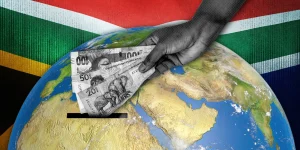
The United States, however, has made South Africa’s approach to expropriation without compensation one of its central objections.
South Africa’s Expropriation Act allows property to be expropriated in the public interest and provides for circumstances where compensation can be zero. It does not, however, simply give the state unlimited authority to seize privately owned property without legal process.
The legislation provides for negotiations in most circumstances and allows disputes to be taken to court.
That distinction is important because the phrase “land confiscation” can create a much broader impression than the actual legal framework.
The political argument over whether the law represents necessary redress or creates unacceptable property rights risks is therefore likely to continue inside South Africa regardless of Washington’s position.
Pretoria has consistently rejected the persecution narrative
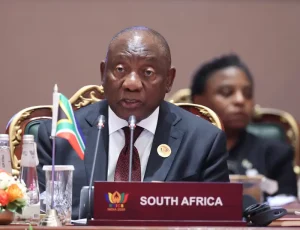
South Africa’s government has rejected allegations that it is pursuing a campaign against white South Africans.
Cabinet has also previously said that South Africans of all political views have a home in the country and linked the country’s continuing socioeconomic problems to the legacy of apartheid and broader structural challenges.
This is where the international argument becomes particularly complicated.
South Africa unquestionably has serious violent crime.
It also has deep racial and economic inequality.
It has an unresolved land question.
And political rhetoric around race remains highly contested.
But those facts do not automatically establish the broader claim that the South African state is conducting a campaign of racial persecution against white citizens.
That is precisely the point at which Washington and Pretoria disagree.
From Trump and Ramaphosa to visa restrictions
The latest announcement also needs to be viewed as part of a much longer deterioration in relations.
The Trump administration has already taken several measures against South Africa, while President Donald Trump has publicly accused the country of mistreating white farmers and supported a US refugee pathway for Afrikaners.
South Africa has rejected the allegations.
The relationship was also strained by Pretoria’s foreign policy, particularly its legal action against Israel at the International Court of Justice, which Washington has strongly opposed. Reuters reported that the US criticism of South Africa extends beyond domestic racial and land policies to its position on Israel and Gaza.
There have also been trade consequences.
The latest visa restrictions therefore do not stand alone.
They are another piece in an increasingly complicated relationship involving race, land, foreign policy, trade and diplomacy.
The warning that should get Pretoria’s attention
Perhaps the most significant part of the latest announcement is not the visa restrictions themselves.
It is what the US Embassy said about what could come next.
The embassy described the policy as only the first step in a series of escalatory measures.
That changes the conversation.
If the restrictions remain limited to a small number of individuals, their practical effect may be relatively narrow.
But if Washington follows them with broader economic, diplomatic or travel measures, the consequences could become much more significant.
South Africa’s relationship with the United States matters economically, diplomatically and strategically.
The country also has to balance that relationship against its own foreign policy priorities and its relationships with other global powers.
That is becoming increasingly difficult.
South Africa cannot ignore the domestic issues either
There is another side to this story that should not be lost in the argument between Washington and Pretoria.
South Africa does have unresolved problems involving land ownership, inequality, violent crime and racial tension.
Those problems existed long before the Trump administration began highlighting them.
Pretoria therefore has a responsibility to address legitimate concerns around crime, property rights and social cohesion regardless of what Washington says.
But addressing those problems is different from accepting Washington’s interpretation of South Africa’s political system.
The two issues can exist simultaneously.
South Africa can acknowledge that its land reform process requires clarity and confidence while maintaining that historical dispossession must be addressed.
It can confront violent crime without accepting the idea that an entire racial group is being systematically persecuted.
And it can defend its foreign policy without pretending that diplomatic choices carry no consequences.
What happens next?
For now, the biggest unanswered question is who will actually be affected.
The US has created the mechanism.
The names, cases and eventual enforcement will show how aggressively Washington intends to use it.
South Africa’s response will also matter.
A public confrontation could push the relationship further backwards. Quiet diplomatic engagement could create space for negotiations.
But the latest move suggests that the relationship has entered a different phase.
This is no longer simply Donald Trump making controversial statements about South Africa.
Washington has now attached a formal immigration consequence to its objections.
And that is why the latest announcement matters.
The real test is whether this becomes the ceiling of the dispute or merely the beginning of something much bigger.
For South Africa, the challenge is balancing sovereignty and domestic reform with the practical reality that relationships with major global powers have consequences.
For the United States, the question is whether targeted visa restrictions will produce the policy changes Washington wants or simply deepen the diplomatic divide.
Either way, the disagreement is no longer staying inside diplomatic statements.
It is becoming policy.